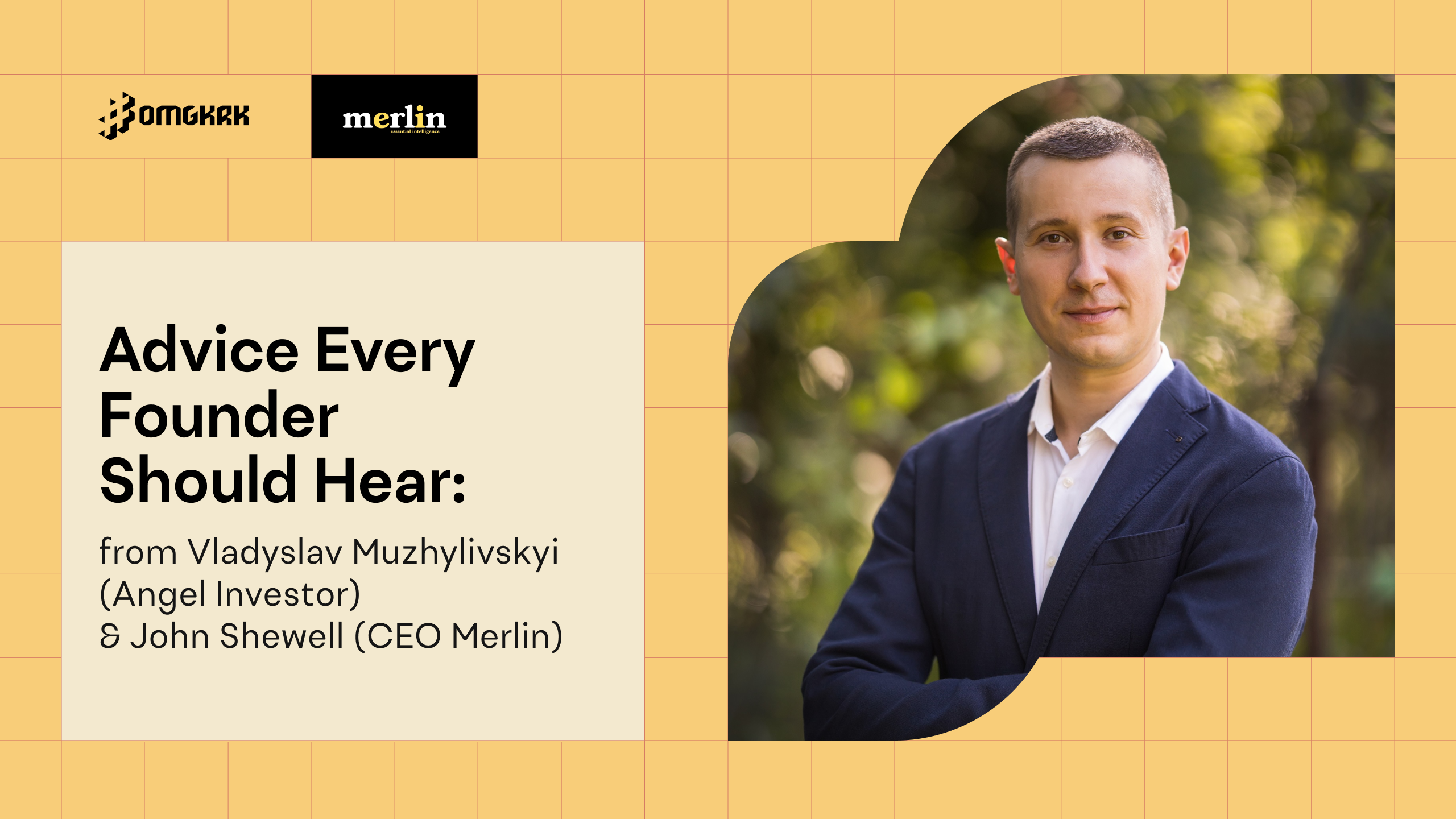
Experience will always be the best teacher, but the right advice can make the journey a little faster — and a lot smarter. In conversation with Vladyslav Muzhylivskyi and John Shewell shared what they’ve learned building and backing early-stage startups.
Advice from Vladyslav Muzhylivskyi:
Great rounds don’t appear out of nowhere — they’re built.
“If you’re looking for money, you have to be proactive. Don’t just sit around waiting for investors to discover you — get out there, share what you’re building, talk about your vision. ‘Your network is your net worth’. That’s basically my life’s credo. If you know the right people, they can open the right doors. But it’s not just about knowing people — it’s about creating real, mutual connections….
… when John and I first met for coffee — we quickly saw there was a fit. It’s the same for founders: find your fit with the people you’re approaching.”
Products can evolve; character doesn’t.
“For me as an investor, I don’t just look at the idea or even the product — I invest in people. Often when I come in early, the product isn’t finished yet. So I need to know: Are these founders adaptable? Can they take feedback? Whether or not I want to do business with them and help them grow, basically whether or not they are capable of overcoming my objections?
In the beginning, when I assess founders — I want to understand that there’s mutual trust between us. As John rightly said, I also treat startups like a marriage. It’s the same idea, because it’s a long journey, a long-term deal. When you look at the typical timeline for investment and exit, it can easily take eight years or more — sometimes up to twelve. That’s just statistical reality.”
Value beyond the wire
“And from the investor side — money is only part of it. I try to be more than just a check. I help with hiring, connect them with potential customers, make intros to other angels and VCs, and help shape the strategy. That’s what it means to be smart money. You have to add value beyond the bank account.
Advice for investors
“One last thing — and this is really important for angel investors to hear: build a real portfolio. Most startups will fail. You need to invest in enough companies to find those 1 or 2 winners that will return the whole fund. If you’re only doing three or four deals, the math just doesn’t work.”
Advice from John Shewell:
Be crystal clear about what you’re solving and the mission behind it
“The first thing founders need is to be absolutely crystal clear about their hypothesis — what they believe in and where they’re going. And then they need to find investors who not only align with that vision, but also bring something more to the table than just capital. Smart money trumps. That’s absolutely crucial.”
Capability over capital
“The success rate of startups is extremely low. So, taking capital is one thing. But if you surround yourself with intelligent people that are way smarter than you, then you give yourself an additional chance. It’s not guaranteed, but you’re giving yourself a better chance. In a way, I take less money for — you know — extreme intelligence surrounding me. With those sorts of people — that’s the first point.”
Strong Opinions, Loosely Held
“The second thing is conviction — but also flexibility. There’s a saying I use: ‘Strong opinions, loosely held.’ You need a strong belief in what you’re building, but if the market or your investors show you a better opportunity, you have to be willing to let go and follow the demand. If you hold on too tightly, you actually become harmful to yourself and the company.”
Every milestone hides a thousand unseen hours
“You’ll face relentless setbacks, sleepless nights, and moments where everything feels impossible. I remember times at wefox when we stayed awake for three or four days straight just to get something done. You need extreme resilience to handle that kind of pressure — and no one sees that part of it. But it’s always there.”
Your business can only scale as far as you do
“Your company’s growth stops the moment your personal growth stops. That’s why it’s so important to surround yourself with people who help you grow as a leader and founder.”
Partnership: take it like a marriage
“Think of your early investors as your first real partners; it’s like a marriage. It’s a long-term relationship. Ask yourself: Can we grow together? Can we support each other through the highs and lows? That’s what makes a startup work.”
Bottom line for founders and investors alike: act with intent, invest in genuine relationships, and play the long game. Ecosystems compound when everyone wins.
Read the first part of the interview: OMGKRK Connected: Merlin & Angel Investor
Author: Kateryna Koshenko